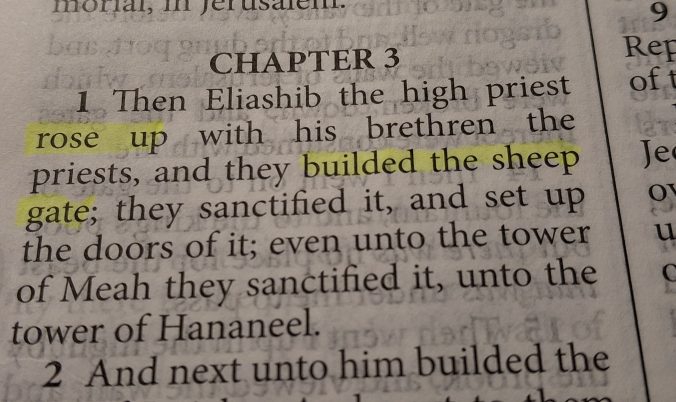
“After him Baruch the son of Zabbai earnestly repaired the other piece, from the turning of the wall unto the door of the house of Eliashib the high priest.” (Nehemiah 3:20, KJV)
Nehemiah chapter three reads like a massive master roster, listing name after name of families, priests, and workers carrying stone along the damaged perimeter of Jerusalem. Most entries follow a simple rhythm: so-and-so repaired this section, and next to him, so-and-so repaired another. But when Nehemiah’s pen reaches Baruch, something shifts. A single word breaks the monotony: earnestly.
Out of dozens of diligent workers, Baruch was singled out for the fierce passion and burning zeal he brought to his assigned post. His name, derived from the Hebrew word for “blessed,” fit his impact perfectly. He didn’t just carry rocks; he worked with an intensity that made people turn their heads.
The Power of Contagious Enthusiasm
Passion is infectious. When someone approaches a tough job with wholehearted energy, it naturally raises the bar for everyone standing nearby. It isn’t hard to picture the chatter along the scaffolding: “Did you see Baruch over there? He laid two hundred bricks before lunch!” “Two hundred? Watch me set four-fifty before the sun goes down.”
Diligence sparks momentum. On the other hand, apathy spreads just as fast. When we treat our daily obligations as mundane drudgery, dragging our feet and barely scraping by with the absolute minimum, we drain the energy out of the room. The Apostle Paul gave the early church a clear remedy for sluggishness: “And whatsoever ye do, do it heartily, as to the Lord, and not unto men” (Colossians 3:23). When you realize your ultimate Supervisor is our heavenly Father, minimum effort is no longer an option.
Character Built in the Mundane
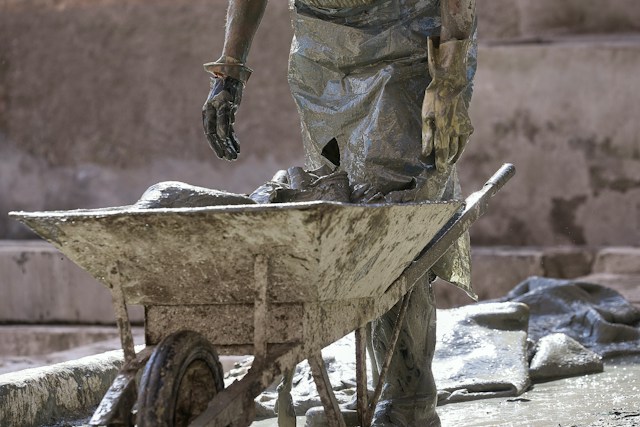
Our walk with Christ frequently leads us into assignments that feel ordinary or unglamorous. We naturally prefer the high-profile roles, building the perfectly straight wall where the whole town can applaud our craftsmanship. Yet, a wall will quickly collapse if no one bothers to mix the mortar with care.
Real Christian character is rarely forged on a public stage where everyone is watching. Public spotlight can easily feed human pride, leading straight to a fall. Instead, God builds deep spiritual stamina in the dull, tedious tasks that go unnoticed by the crowd. Perhaps your daily labor is seen by only one co-worker, one child, or one neighbor. Rest assured, that person is watching your attitude closely to see if your faith makes a real difference in the grind of everyday life.
Becoming a Spark Where You Stand
If you feel stuck in an ordinary, unexciting season, wondering why God hasn’t handed you bigger opportunities, take heart. He hasn’t forgotten you. He might be testing your faithfulness in small things, shaping your humility, or preparing you for something greater down the road.
Or maybe—just maybe—He placed you in that exact spot to be another Baruch. He may have positioned you right there to bring a spark of fiery zeal into a dull environment, lifting up the weary hands of the person working right beside you.
Seed for Thought: Are you approaching your daily responsibilities as a tedious chore or as an act of worship to God? Ask the Lord today to replace any spirit of drudgery with a fresh spark of zeal, using your attitude to encourage someone around you.
Reflect and Respond
-
Evaluating Your Spark: Is your work ethic currently inspiring the people around you, or is a sluggish attitude dragging down your colleagues? Reflect on how approaching your duties “as unto the Lord” changes your daily perspective.
- Embracing Quiet Assignments: Character is forged in the tedious tasks nobody sees. Are you willing to faithfully mix the mortar and carry out the inconspicuous work without needing constant public recognition?
-
Encouraging the Weary: Who has God placed beside you today who needs to be lifted up by your positive example and earnest effort? Commit to bringing enthusiasm and diligence to your post right where you are.