"Who hath ears to hear, let him hear."

Tag: Christianity (Page 1 of 2)

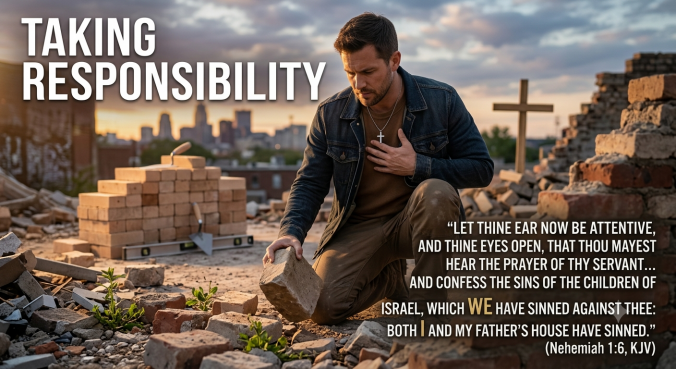
Taking Responsibility

Let thine ear now be attentive, and thine eyes open, that thou mayest hear the prayer of thy servant, which I pray before thee now, day and night, for the children of Israel thy servants, and confess the sins of the children of Israel, which we have sinned against thee: both I and my father’s house have sinned.” (Nehemiah 1:6, KJV)

Whenever a crisis hits or a difficult situation unfolds, our natural human instinct is to look for someone else to blame. It is always much easier to point out the flaws, mistakes, and shortcomings of the people around us than it is to look honestly into our own hearts. When things begin to fall apart in our families, our churches, or our communities, we frequently look for a convenient scapegoat so we can remove our hands from the problem.

However, Nehemiah modeled a completely different approach to brokenness. When he received the devastating news about the ruined walls and burned gates of Jerusalem, he didn’t launch into a critical evaluation of the failed leaders who had preceded him. Instead, he fell to his knees in deep intercession. As he poured out his heart to the Lord, his prayer featured two incredibly powerful words: we and I. Rather than distancing himself from the problem, he included himself directly, taking personal blame for the brokenness of his homeland.

The Deception of Pointing Fingers

It would have been very easy for Nehemiah to point a finger at the generations of Israelites who had failed their responsibilities before him. After all, he was living hundreds of miles away, serving comfortably in the Persian palace. He had no personal role in the historic failures that led to Jerusalem’s destruction. Yet, he understood a vital truth that every believer must learn: pointing fingers simply does not get any work done. A great leader refuses to stand on the sidelines as a mere critic. Instead, a true leader must lead by example, being the first one to take responsibility and the first one to take up the tools to start building.

The Posture of True Prayer

God has graciously given us the privilege of prayer, allowing us to bring our deepest burdens directly before His throne. But prayer is not a platform for us to complain about the faults of others. We must enter into prayer with genuine humility and a repentant heart. If we approach God while harboring bitterness, or if we are constantly blaming others for our current situation, our prayers will be hindered. If we find ourselves focusing entirely on the failures of those around us, our first petition must be for God to change our own attitude.

Stepping into the Gap

Spiritual restoration can only begin when we stop making excuses and start owning our part in the circumstances around us. Nehemiah’s willingness to confess his own sins, along with the sins of his nation, cleared the way for God to use him in a miraculous way. When we humble ourselves and take responsibility, we invite the Holy Spirit to work through us to bring healing. Do not wait for someone else to take the first step toward reconciliation or rebuilding. Allow God to work on your heart today, and be willing to be the one who steps into the dust to start the restoration process.

Seed for Thought: Is there a broken area in your life, family, or church where you have been pointing fingers at others? Take a moment right now to bring that situation to the Lord in humility, asking Him to shift your focus from others’ failures to what He wants to do through you.

Reflect and Respond

  • Owning the Brokenness: When you pray about the problems in your immediate circle, do you include yourself in the confession, or do you view yourself as an innocent bystander? Reflect on how Nehemiah’s choice to use “we” and “I” opened the door for God’s power to move.
  • Leading by Example: Are you currently waiting for someone else to fix a broken situation, or are you willing to lead by example? Consider what it looks like to be the first one to take responsibility and actively pick up the tools to start building today.
  • Exchanging Blame for Humility: Think about whether you have been blaming others for your current circumstances. If so, are you willing to make your first petition a prayer for God to change your attitude? Commit to entering His presence with a truly humble and repentant heart.

Share this post

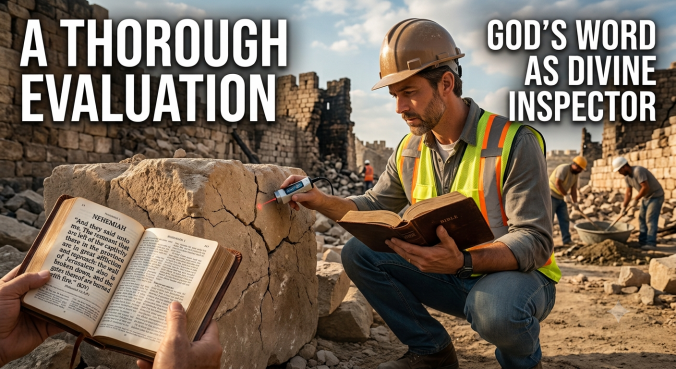
A Thorough Evaluation

And they said unto me, The remnant that are left of the captivity there in the province are in great affliction and reproach: the wall of Jerusalem also is broken down, and the gates thereof are burned with fire.” (Nehemiah 1:3, KJV)

House flipping has become quite a lucrative enterprise in today’s real estate market. Anyone with a few basic skills and a little management savvy can buy an older or distressed house, make the needed repairs, then resell it at a handsome profit. The key to making this a successful business, though, begins with a thorough evaluation of the prospective house’s condition. Cleaning and painting might make for a quick resale, but if the house isn’t structurally sound, the new homeowner will be extremely disappointed and may take legal action against you. A prudent house flipper will hire a licensed inspector to investigate and report the home’s condition from the ground up.

Nehemiah understood this concept as he accepted his calling to rebuild the city of Jerusalem. When word reached him concerning the ruin of his homeland, he knew that a superficial patch-up wouldn’t suffice. As we study the book of Nehemiah, we can see God’s blueprint for rebuilding the broken walls and burned gates in our own lives.

The Condition: Assessing the Brokenness

While we may not be required to rebuild an ancient city, we are often called to rebuild broken relationships in our lives, broken lives due to some tragedy, or maybe even broken churches. Brokenness has a way of exposing the fragility of our own strength.

The first step in any restoration project is facing the damage honestly. Nehemiah did not minimize the report he received; he allowed the weight of Jerusalem’s condition to drive him to his knees. Before we can begin rebuilding, we must be willing to look directly at the rubble of our circumstances without pretending everything is fine.

The Inspection: Evaluating by the Word

Our first step in rebuilding the brokenness should always include a thorough evaluation in the light of God’s Word. Scripture serves as our divine inspector, revealing the hidden faults, compromised foundations, and structural weaknesses that we might otherwise overlook.

When we hold our broken situations up to the mirror of God’s truth, we are no longer guessing at how to fix them. The Word provides the exact measurements, standards, and wisdom required to construct something lasting. A thorough evaluation allows us to see where we have drifted from God’s design so we can begin the intentional work of structural alignment.

Rebuilding from the Ground Up

True restoration is never an overnight cosmetic job. It requires patience, obedience, and a lifelong commitment to God’s structural process. Do not let discouragement tempt you to settle for a quick, surface-level cover-up of deep-seated issues.

Stand firm in the knowledge that the Lord is the Master Builder. If you will allow Him to inspect your heart and lead the reconstruction, He will take what has been ruined by fire and transform it into a lasting testimony of His faithfulness.

Seed for Thought: What area of your life—whether a relationship, a personal habit, or a spiritual discipline—is currently experiencing brokenness? Take a moment right now to present this area before the Lord, asking Him to begin a thorough evaluation through His Word.

Reflect and Respond

  • Assessing the Condition: When faced with a crisis or a broken relationship, do you tend to rush into quick, cosmetic fixes, or do you take the time for an honest evaluation? Consider how acknowledging the true state of your circumstances is essential for genuine healing.
  • The Divine Standard: How often do you allow God’s Word to serve as the structural inspector of your heart? Reflect on how aligning your personal evaluation with Scripture changes your approach to rebuilding broken areas.
  • A Sound Foundation: Are you trying to rebuild a part of your life using your own management savvy, or are you relying on the ground-up restoration that only the Holy Spirit can provide? Commit today to building a spiritual foundation that will stand strong against the storms of life.
Share this post

Praying in Confidence

“And this is the confidence that we have in him, that, if we ask any thing according to his will, he heareth us: And if we know that he heareth us, whatsoever we ask, we know that we have the petitions that we desired of him.” (1 John 5:14-15, KJV)

There is a specific kind of weight that settles on the heart when we carry a burden for a loved one, a neighbor, or a colleague who has yet to experience the saving grace of Jesus Christ. We often find ourselves at a loss for words, wondering if our prayers are making a difference or if our Father even hears us.

However, the Apostle John provides us with a certainty for our prayer life. The word confidence used here means an assured boldness. He doesn’t suggest that we pray with a “hope so” attitude; he commands us to pray with a “know so” confidence.

The Method: Praying According to His Will

The first step in praying for the lost is aligning our petitions with the heart of the Father. When we pray for someone’s salvation, we aren’t guessing at God’s desires. We know that the Lord is “not willing that any should perish, but that all should come to repentance” (2 Peter 3:9).

When you name that specific person in your quiet time, you are standing on the bedrock of God’s revealed will. The method is simple but significant: take the name of the lost and bind it to the promise of the Word. Paul expressed this same method in Romans 10:1: “Brethren, my heart’s desire and prayer to God for Israel is, that they might be saved.” Your specific desire for their soul is a reflection of God’s own heart.

The Attitude: The Quietness of Certainty

The scripture tells us that if we ask according to His will, “he heareth us.” This isn’t just about auditory perception; it’s about divine attention. The moment the name of that lost soul leaves your lips in faith, the ear of the Almighty is inclined toward you.

John goes a step further: “And if we know that he heareth us… we know that we have the petitions that we desired of him.” This is the attitude of the expectant intercessor. We do not need to wait for the outward signs of change to believe that God is at work. We can rest in the “knowing” that the petition has been granted in the spiritual realm.

Sowing the Seed of Prayer

Do not let “spiritual drift” or discouragement silence your intercession. If you have been praying for a child, a spouse, or a friend for years, remember that the “confidence” mentioned in 1 John is not based on the speed of the result, but on the character of the Hearer.

Continue to ask. Continue to seek. Stand in the gap with the assurance that your prayers are not in vain, for He who promised is faithful.

Seed for Thought: Who is the one person God has laid on your heart today? Take a moment right now to present their name before the throne, knowing that you are asking exactly what He desires to give.

Reflect and Respond

  • Aligning the Will: When you intercede for the lost, do you approach God with a “hope so” attitude, or do you stand on the certainty that it is His revealed will for all to come to repentance? Consider how 2 Peter 3:9 provides a “bedrock” of confidence for your specific request.

  • The Hearing of God: Does the knowledge that God grants “divine attention” to your prayers change the way you handle periods of silence? Reflect on the “quietness of certainty” that comes from knowing He hears you the moment a name leaves your lips in faith.
  • Persistent Sowing: Are you currently binding the names of your loved ones to the promises of the Word, or have you allowed “spiritual drift” to discourage your intercession? Remember that your confidence is anchored in the character of the Hearer rather than the speed of the result.

Share this post

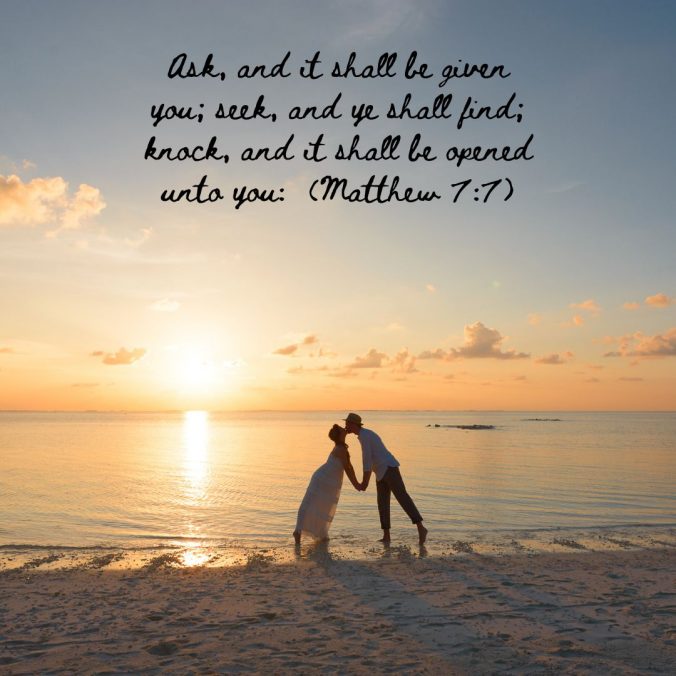
Keep On Praying

“Ask, and it shall be given you; seek, and ye shall find; knock, and it shall be opened unto you:” (Matthew 7:7)

Ask. A simple three letter word that sets things in motion. It’s how we get the things we want. We ask the waitress to bring our food selection from the menu. We ask our coworker to help us lift a heavy object and move it where it needs to be. We ask the pretty girl to go out on a date. Without the ask, we can be assured none of those things we want will happen. We go hungry because the waitress never brings us food. We get reprimanded when we don’t get the job done at work. We never get the opportunity to kiss the girl.

Jesus teaches us in our verse today that it works the same way with our heavenly Father. We must ask for the things we want. God’s storehouse is overflowing with gifts for His children. But He waits for us to come to Him in prayer and ask for the desires of our heart. Yes, sometimes He will drop a surprise in our lap, just like our earthly fathers sometimes give us gifts we aren’t expecting. And while our Father knows all that we have need of, He desires the intimacy of a conversation with us. He wants us to come to Him and ask.

Seek. Many times though, especially early in our Christian growth, our Father will say no when ask him for something. God always knows what’s best for us. He sees the future that we can’t. The answer of no then prompts the question, “why not?”. Our ask must always be according to God’s will. That’s why Jesus tells us to seek. We must search God’s word, meditate on it in prayer, and eventually the Holy Spirit will reveal the answer to us. Seeking is how we develop deeper conversations with our Father. In that deeper connection we begin to understand God’s character and will for our life. It’s there we learn what to ask for that will be pleasing to our Father. We must continuously seek God’s will.

Knock. God rewards our seeking with wisdom which gives us understanding, confidence, and assurance. With that in hand we must be persistent. Maintaining enthusiasm while working on any project is key to successfully accomplishing the task set before us. Keep knocking until the ask is answered. Not only does our persistence show our Father that we trust Him, but it also motivates the faith of those watching us in our day to day Christian walk.

Keep on asking. Keep on seeking. Keep on knocking. Keep on PRAYING!!


Share this post

Purpose

But Daniel purposed in his heart that he would not defile himself with the portion of the king’s meat, nor with the wine which he drank: therefore he requested of the prince of the eunuchs that he might not defile himself. (Dan 1:8)

The young Daniel we read about here has been taken into captivity in Babylon. Like Daniel, we are held captive to this world. While we cannot change this circumstance, we can set ourselves apart from our captor. Daniel chose to hold on to his faith in God rather than conform to his ungodly environment. As Christians, we are to follow Daniel’s example by living our life with intention to please God, not men.

God rewarded Daniel for his faith by elevating his status in the eyes of his captors. While he was severely tested at times, he held the favor of the king of Babylon for most of his life. We are not promised the same treatment in our captivity. However, when we purpose in our heart to be faithful Jesus our Savior, we are promised that one day the chains that hold us captive to this world will be broken. The world holds no power over the promises of God. Simply trusting in Jesus assures us according to His word that nothing can pluck us out of His hand.

Today, let’s reaffirm our purpose; follow God; allow Him to transform us to His will rather than conform to this world.

Share this post

Thank You Jesus

“I will give thanks to the Lord with my whole heart; I will recount all of your wonderful deeds.” (Psalm 9:1)

In our journey of faith, we often find ourselves seeking miracles, looking for grand signs that will affirm our beliefs. But sometimes, it’s the smallest, everyday moments that hold the power to kindle profound joy in our hearts.

My friends, our path to gratitude and joy begins with mindful appreciation of the daily blessings that surround us. It’s easy to overlook these gifts, but they are like precious gems waiting to be discovered. It might be the warmth of the morning sun, the laughter of a loved one, or the simple taste of a well-cooked meal. Each of these is a marvelous work of the Creator.

As we start our gratitude practice, let us remember that it’s not about the grand gestures but the little things that light up our hearts. Try this: today, pause for a moment, take a deep breath, and think of three things you’re grateful for. They can be as humble as a gentle breeze or a cozy blanket. When we express our gratitude with our whole hearts, we begin to uncover the joy hidden in these small, everyday wonders.

Remember, my dear friends, that as we foster gratitude, we not only find joy in the little things but also draw closer to our Heavenly Father, who delights in our praises and showers us with His boundless love.

In this journey, we invite God to help us in fostering our gratitude and finding joy. Let us pray together:

Heavenly Father, we come before you with open hearts, seeking the joy in the little things that you’ve surrounded us with. We thank you for the daily blessings that may often go unnoticed. Help us, O Lord, to develop a mindfulness that appreciates your marvelous works in every moment. May our gratitude practice be a testament to your love and grace. In Jesus’ name we pray. Amen.

Share this post

Secret Prayers

But thou, when thou prayest, enter into thy closet, and when thou hast shut thy door, pray to thy Father which is in secret; and thy Father which seeth in secret shall reward thee openly. (Matthew 6:6)

Let’s take time today to go to our inner room, close the door, and pray to our Father in secret. In the busyness of life, it’s easy to push our prayer life to the margins. But prayer is vital for deepening our connection to God. When we pray, we enter into intimate communion with our Creator.

Prayer is not simply reciting requests or repeating memorized words. True prayer engages our mind, heart, and spirit. It’s an act of fully focusing on God – acknowledging His presence within and around us. We quiet our thoughts, let go of distractions, and open our inner being to receive His peace, wisdom, and guidance.

As we pray, we can share our honest thoughts and feelings with God. We can cry out in despair, grieve our losses, confess our shortcomings. Or we can voice gratitude, ask for help or insight, and praise Him for His goodness. God already knows our hearts, yet He invites us to freely express ourselves. Through prayer, we cast our cares upon the Lord, knowing He hears us and responds in His perfect way and timing.

Prayer also requires listening. When we still our mind and spirit, we make room to hear God’s gentle voice. His words may come as scripture that suddenly surfaces in our memory, an impression that guides our thoughts, or simply a sense of His presence reassuring us. Regular prayer helps us recognize God’s voice and discern His direction for our life.

Father, we desire to deepen our relationship with You. Help us regularly practice heartfelt prayer. Quiet our distracted thoughts, so we can focus completely on Your loving presence. Speak to us, Lord. Reveal areas where we need to surrender and grow. Fill us with Your peace and wisdom, so we can walk in step with Your Spirit each day. In Jesus’ name, Amen.

Share this post

Be Still

“Be still, and know that I am God: I will be exalted among the heathen, I will be exalted in the earth.” Psalm 46:10 (KJV)

When external forces suddenly shift the ground under our feet, stillness sounds dangerously counterintuitive. As life unravels unexpectedly, instinct demands grabbing control rather than releasing outcomes to God’s care. We rely on restless striving, vainly attempting to steady the crumbling landscape surrounding us instead of trusting the Solid Rock who upholds all things through raging storms.

Yet God commands His children oppositely in tumultuous times: Be still. Cease striving. Surrender thwarted plans and don’t demand answers or solutions on your timeline. For stillness stabilizes perspective. Stillness imparts opportunity to behold the Almighty One reigning unthreatened over human frailties and furies. Our still reflection should mirror back the unshakable God dwarfing disruption and chaos rampant on earth.

The faithful behold the Ancient of Days steady despite the undulations of passing ages and fashions. “For I am the LORD, I change not; therefore ye sons of Jacob are not consumed.” (Malachi 3:6) Shall we not also know with utmost certainty that though old orders may pass away abruptly; His love withstands resiliently upholding His beloved?

What raging storms tempt reactionary responses today? Pause and ponder instead God’s track record proving almighty faithfulness through history’s stormy eons. Fix your eyes on His immutable character. He alone calms the billows with a word. No foaming tide overflows the boundaries He establishes. Be still in this eternal assurance: The Lord God Most High transcends every threat. He shall receive glory displaying timeless salvation.

Lord, we admit our propensity to plaster over erupting instability with busy striving. Teach us the power unleashed through stillness anchored securely in who You are, not what swirls around us. May we behold You today—unthreatened Majesty calming storms with one whisper, who “laughs at the tempest and rides upon the storm.” In Jesus’ name we pray, Amen.

Share this post

The Light of the World

And as Jesus passed by, he saw a man which was blind from his birth. And his disciples asked him, saying, Master, who did sin, this man, or his parents, that he was born blind? Jesus answered, Neither hath this man sinned, nor his parents: but that the works of God should be made manifest in him. I must work the works of him that sent me, while it is day: the night cometh, when no man can work. As long as I am in the world, I am the light of the world. (John 9:1-5 KJV)

Jesus gives us a powerful lesson that sometimes challenges in life are not a result of our own or our parents’ sins, but rather an opportunity for God’s works to be revealed. In these verses, Jesus emphasizes the importance of his mission and the limited time he has on Earth. He calls himself the light of the world, implying that his presence brings hope and guidance to those in darkness.

Jesus came to this dark world as a beacon of light to illuminate our lives. His presence brings clarity and understanding, allowing us to see beyond the surface and into the depths of our spiritual journey.

Through his teachings and actions, Jesus showed us the power of healing. Whether restoring physical sight to the blind or bringing spiritual enlightenment to the lost, he showed himself as the ultimate provider of light and salvation.

Jesus’ message goes beyond mere illumination; it calls for obedience and surrender to God’s sovereignty. By following his example, we can navigate through life with a renewed sense of purpose and direction.

Let us embrace the light that Jesus brings into our lives and allow it to shine through us. May we allow Christ to radiantly shine through us to be beacons of hope, love, and compassion in a world that desperately needs it. Even in the bleakest moments, a glimmer of light awaits to lead us towards a brighter future.

Just as Jesus felt compelled to work while it was still day, we should strive to make a positive impact in this world during our time here. Let us remember that each one of us has a unique purpose and potential to bring forth God’s works through acts of kindness, love, and compassion. May we always seek opportunities to be a light amidst darkness and allow God’s miracles to manifest through us.

Share this post

The Envy of Angels

Guest Post by Mindi Foster

This is a faithful saying, and worthy of all acceptation, that Christ Jesus came into the world to save sinners; of whom I am chief.
(1 Timothy 1:15)

One of the most beautiful things about the Gospel, and Jesus in general, is not just that it saves us from Hell. It’s not just beautiful because of eternal life with God. It’s beautiful because I’m constantly being saved from the issue of me.

If you take note of any of the Apostle Paul’s writing, he frequently spoke against selfish ambitions. Additionally, the book of James even notes that selfishness, along with envy, create chaos and every evil practice (James 3:16). Granted, it’s understandable that there are spiritual forces at work, but still, these are serious factors to consider.

The default of humanity is selfishness. Every child knows how to be selfish because it’s their natural disposition. It’s the same for us spiritually too. Growth and maturity mean that we learn to walk in the Spirit thinking less of ourselves and more of Christ and others.

This stance goes against the grain of the world and the very popular Christian-psychology movement that’s occurring in many churches today. And don’t get me wrong, I love psychology, but psychology is me-focused, or self-centered which is the opposite of Gospel-entered theology. There is need of proper balance.

It’s fine to understand why you behave or think a certain way, understanding is beneficial and is actually encouraged in Scripture. However, God must still be glorified first and foremost. Otherwise, we are a hopeless mess.

If everything is about me, then it all falls on me and is up to me. I’m not that powerful. Nor can I handle that much responsibility (or want to for that matter).

So let’s get back to the beauty of the Gospel. God didn’t have to save us, but He did. The message of the Cross isn’t about us, but it is for us. To put it in the words of Trevin Wax, “Our Salvation is the envy of angels.” And that is certainly a beautiful thing to behold.

Thine, O LORD, is the greatness, and the power, and the glory, and the victory, and the majesty: for all that is in the heaven and in the earth is thine; thine is the kingdom, O LORD, and thou art exalted as head above all. (1 Chronicles 29:11)

Mindi is an encourager, brown belt in Brazilian Jiu-jitsu, as well as an author and blogger. You can find her blog and books at www.buildingyourmomentum.com.

Share this post
« Older posts

© 2026 SeedSowing.org

Theme by Anders NorenUp ↑