"Who hath ears to hear, let him hear."

Tag: leadership

A Mission at Home

From above the horse gate repaired the priests, every one over against his house.” (Nehemiah 3:28, KJV)

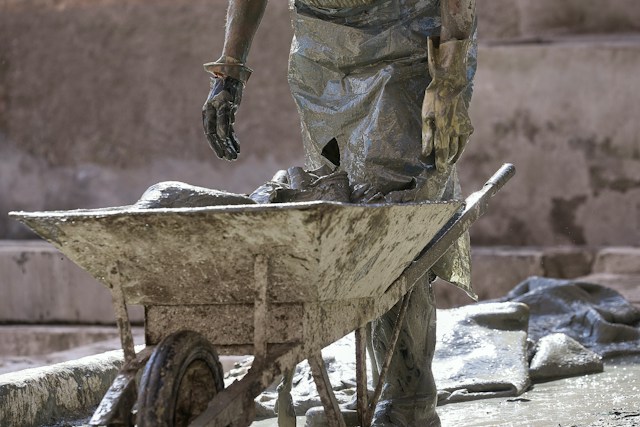
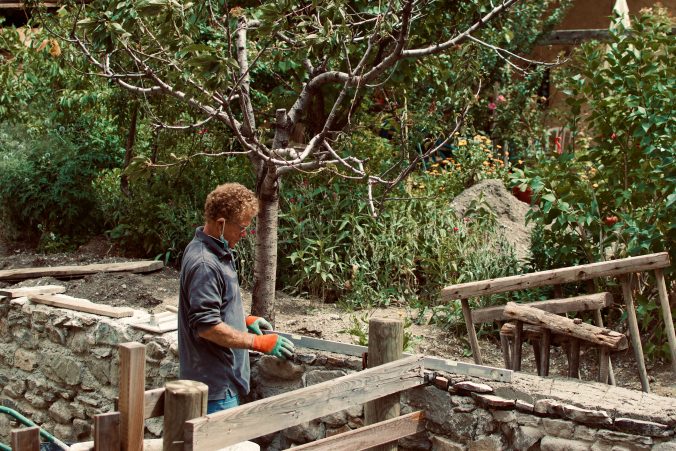
Jerusalem was originally established as the city of God’s chosen people; the place where God met with mankind. It was designed from the beginning to shine as a light of hope for a darkened world, yet it lay fallen in disgrace because of Israel’s persistent sin. But even in the middle of ruined stone and charred timber, spiritual healing and restoration remained possible. Inspired by God, Nehemiah organized the reconstruction with an astute, practical strategy: he directed the workers to first repair the portions of the wall situated right outside their own front doors.

The Work Begins in the Heart

Today, God has entrusted His church with the same purpose; to carry life-giving light and hope into a dark world. But whenever we allow sin to compromise our witness and bring disgrace upon the church, we rob desperate souls of the hope found in Christ. Real repair cannot be outsourced to someone else. It has to begin at home, starting deep within the quiet chambers of our own hearts. We cannot fix the spiritual posture of our culture until we are willing to deal honestly with the rubble sitting on our own doorstep.

Reaching the Nearest First

Jesus left us with a clear command to take the gospel to every nation. Yet it makes little sense to travel halfway around the world on a mission trip if we consistently neglect the lost souls living under our own roof or residing right down the street. The people nearest to our hearts should naturally receive our greatest attention and persistent prayers. Nehemiah intentionally assigned families to the wall sections right outside their living spaces because he understood human nature. We naturally work with deeper urgency and utmost care when we are protecting the people we love most.

A Visible Witness to Others

When a believer takes personal ownership of the spiritual wall surrounding their home, the impact reaches far beyond their property line. That kind of meticulous attention to detail and personal devotion creates a clear demonstration of faith to everyone who passes by. Neighbors take notice when a home is anchored in genuine faith, integrity, and grace. That daily consistency opens natural doors to share the gospel message of Jesus Christ. When we guard our own households and build right where God has placed us, our lives become a place of strength and hope for a watching world.

Seed for Thought: Have you been looking past your own household or neighborhood to find a place to serve God? Take a moment today to ask the Lord to open your eyes to the spiritual and physical needs right outside your own front door.

Reflect and Respond

  • Starting at the Doorstep: Nehemiah assigned the priests and workers to repair the wall directly outside their own homes. Are there spiritual repairs or conversations you need to prioritize within your own family or household before looking further out?

  • Focusing Your Attention: We give our greatest care and energy to the things that protect our loved ones. How can you direct more intentional prayer and effort toward winning the lost people living in your immediate circle?
  • A Witness to the Neighborhood: Meticulous care for your home’s spiritual health creates a visible witness for those passing by. What is one practical way your home or lifestyle can reflect the hope and truth of Jesus Christ to your neighbors this week?

Share this post

Servant Leadership

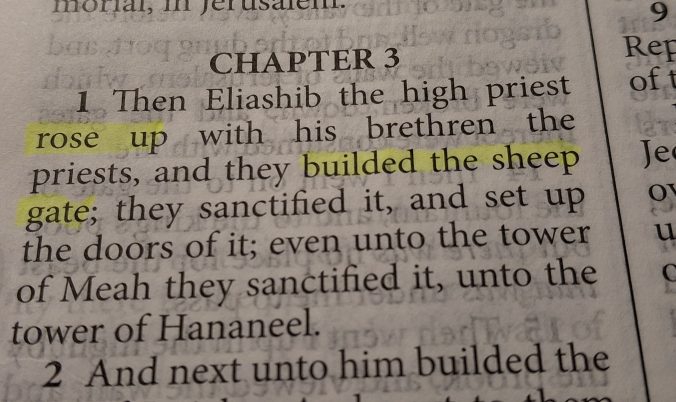
Then Eliashib the high priest rose up with his brethren the priests, and they builded the sheep gate; they sanctified it, and set up the doors of it; even unto the tower of Meah they sanctified it, unto the tower of Hananeel.” (Nehemiah 3:1, KJV)

True leadership is rarely proven from an elevated platform. It shows up in the dust and sweat of everyday effort. When a project feels overwhelming or a community is hurting, people do not need another motivational speech; they need to see leaders who are willing to get their hands dirty.

When the call went out to rebuild the ruined walls of Jerusalem, Eliashib the high priest did not stand on ceremony. He did not assign the heavy lifting to assistants while reserving a supervisory position for himself. Instead, he stepped up to the rubble alongside his fellow priests and got straight to work.


Leading by Example

Eliashib’s name comes from the Hebrew elyâshı̂yb, meaning “God will restore”. He lived up to that name by aligning his life with God’s restorative purpose. As high priest, Eliashib held the highest religious office in the land, yet he chose to honor God by yielding his authority to serve the people of Jerusalem.

Along with his fellow priests, Eliashib set the pace for the entire nation by being the first to set his hands to the grueling labor of rebuilding. They didn’t wait for others to create momentum. By taking personal initiative, they demonstrated that spiritual leadership is not about title or prestige; it is defined by humble service.


The Shadow and the Substance

Under the Law, God ordained the high priest as the mediator between God and man, calling him to offer animal sacrifices as symbols of obedience and trust for the forgiveness of sins. Those imperfect, temporary sacrifices could only serve as symbolic placeholders. They pointed forward to a deeper reality that was yet to come.

When Jesus Christ arrived as our ultimate High Priest, He completely transformed our understanding of leadership and sacrifice. He didn’t offer animal blood that could never fully wash away sin. Instead, He offered His own sinless blood as the final, complete payment for our redemption. While walking among us as a man, Jesus modeled perfect servant leadership, demonstrating that true greatness is found in laying down one’s life for others.


Entering Through the Sheep Gate

It is worth noting the very first repair project Eliashib and the priests undertook: the Sheep Gate. This was the specific entrance through which sheep and other animals were brought into the city for temple sacrifices. Before any other section of the wall was touched, the gateway dedicated to sacrifice had to be established and sanctified.

In our own lives, spiritual restoration follows that exact same pattern. Before our personal brokenness can be healed, we must first pass through the sacrificial blood of the Lamb of God. The earthly priests were called to build a physical gateway for sacrifice and repentance in Jerusalem. Jesus, our heavenly High Priest, built the eternal gateway for our salvation through His own precious blood.

Seed for Thought: Are you waiting for someone else to fix a broken situation in your church, family, or community? Take a moment today to ask the Lord for a servant’s heart, and be willing to be the first one to step up and help rebuild.


Reflect and Respond

  • Leading from the Front: Eliashib didn’t just instruct others; he was the first one carrying stones and setting up doors. How can you model servant leadership in your own circle of influence this week?

  • The Perfect Sacrifice: Reflect on the contrast between symbolic animal offerings and the untainted blood Jesus offered on your behalf. How does His sacrifice shape your understanding of grace?
  • Starting at the Cross: Just as rebuilding began at the Sheep Gate, personal renewal begins with repentance. Have you brought your brokenness through the gateway of Christ’s salvation, or are you trying to repair your life in your own strength?

Share this post

Taking Responsibility

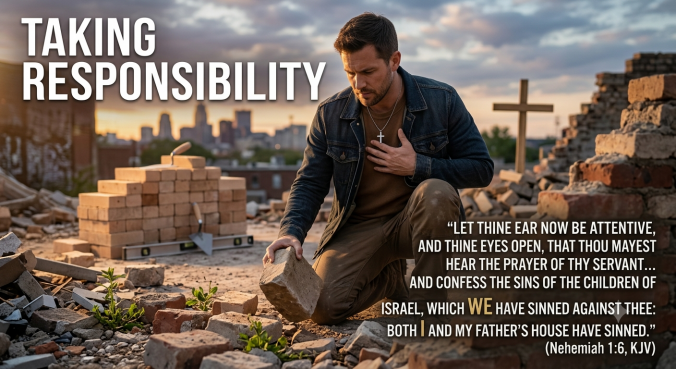
Let thine ear now be attentive, and thine eyes open, that thou mayest hear the prayer of thy servant, which I pray before thee now, day and night, for the children of Israel thy servants, and confess the sins of the children of Israel, which we have sinned against thee: both I and my father’s house have sinned.” (Nehemiah 1:6, KJV)

Whenever a crisis hits or a difficult situation unfolds, our natural human instinct is to look for someone else to blame. It is always much easier to point out the flaws, mistakes, and shortcomings of the people around us than it is to look honestly into our own hearts. When things begin to fall apart in our families, our churches, or our communities, we frequently look for a convenient scapegoat so we can remove our hands from the problem.

However, Nehemiah modeled a completely different approach to brokenness. When he received the devastating news about the ruined walls and burned gates of Jerusalem, he didn’t launch into a critical evaluation of the failed leaders who had preceded him. Instead, he fell to his knees in deep intercession. As he poured out his heart to the Lord, his prayer featured two incredibly powerful words: we and I. Rather than distancing himself from the problem, he included himself directly, taking personal blame for the brokenness of his homeland.

The Deception of Pointing Fingers

It would have been very easy for Nehemiah to point a finger at the generations of Israelites who had failed their responsibilities before him. After all, he was living hundreds of miles away, serving comfortably in the Persian palace. He had no personal role in the historic failures that led to Jerusalem’s destruction. Yet, he understood a vital truth that every believer must learn: pointing fingers simply does not get any work done. A great leader refuses to stand on the sidelines as a mere critic. Instead, a true leader must lead by example, being the first one to take responsibility and the first one to take up the tools to start building.

The Posture of True Prayer

God has graciously given us the privilege of prayer, allowing us to bring our deepest burdens directly before His throne. But prayer is not a platform for us to complain about the faults of others. We must enter into prayer with genuine humility and a repentant heart. If we approach God while harboring bitterness, or if we are constantly blaming others for our current situation, our prayers will be hindered. If we find ourselves focusing entirely on the failures of those around us, our first petition must be for God to change our own attitude.

Stepping into the Gap

Spiritual restoration can only begin when we stop making excuses and start owning our part in the circumstances around us. Nehemiah’s willingness to confess his own sins, along with the sins of his nation, cleared the way for God to use him in a miraculous way. When we humble ourselves and take responsibility, we invite the Holy Spirit to work through us to bring healing. Do not wait for someone else to take the first step toward reconciliation or rebuilding. Allow God to work on your heart today, and be willing to be the one who steps into the dust to start the restoration process.

Seed for Thought: Is there a broken area in your life, family, or church where you have been pointing fingers at others? Take a moment right now to bring that situation to the Lord in humility, asking Him to shift your focus from others’ failures to what He wants to do through you.

Reflect and Respond

  • Owning the Brokenness: When you pray about the problems in your immediate circle, do you include yourself in the confession, or do you view yourself as an innocent bystander? Reflect on how Nehemiah’s choice to use “we” and “I” opened the door for God’s power to move.
  • Leading by Example: Are you currently waiting for someone else to fix a broken situation, or are you willing to lead by example? Consider what it looks like to be the first one to take responsibility and actively pick up the tools to start building today.
  • Exchanging Blame for Humility: Think about whether you have been blaming others for your current circumstances. If so, are you willing to make your first petition a prayer for God to change your attitude? Commit to entering His presence with a truly humble and repentant heart.

Share this post

© 2026 SeedSowing.org

Theme by Anders NorenUp ↑