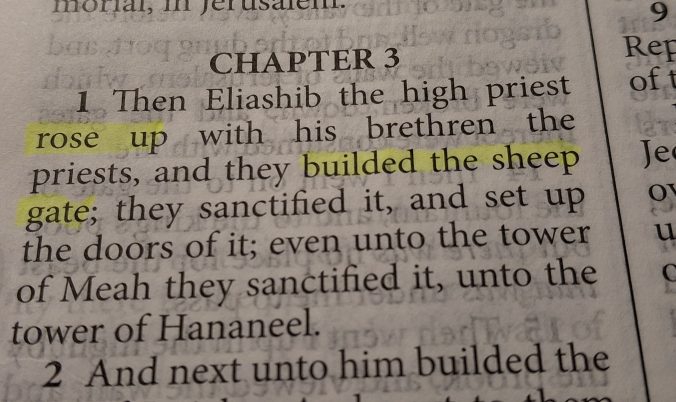
“Then Eliashib the high priest rose up with his brethren the priests, and they builded the sheep gate; they sanctified it, and set up the doors of it; even unto the tower of Meah they sanctified it, unto the tower of Hananeel.” (Nehemiah 3:1, KJV)
True leadership is rarely proven from an elevated platform. It shows up in the dust and sweat of everyday effort. When a project feels overwhelming or a community is hurting, people do not need another motivational speech; they need to see leaders who are willing to get their hands dirty.
When the call went out to rebuild the ruined walls of Jerusalem, Eliashib the high priest did not stand on ceremony. He did not assign the heavy lifting to assistants while reserving a supervisory position for himself. Instead, he stepped up to the rubble alongside his fellow priests and got straight to work.
Leading by Example
Eliashib’s name comes from the Hebrew elyâshı̂yb, meaning “God will restore”. He lived up to that name by aligning his life with God’s restorative purpose. As high priest, Eliashib held the highest religious office in the land, yet he chose to honor God by yielding his authority to serve the people of Jerusalem.
Along with his fellow priests, Eliashib set the pace for the entire nation by being the first to set his hands to the grueling labor of rebuilding. They didn’t wait for others to create momentum. By taking personal initiative, they demonstrated that spiritual leadership is not about title or prestige; it is defined by humble service.
The Shadow and the Substance
Under the Law, God ordained the high priest as the mediator between God and man, calling him to offer animal sacrifices as symbols of obedience and trust for the forgiveness of sins. Those imperfect, temporary sacrifices could only serve as symbolic placeholders. They pointed forward to a deeper reality that was yet to come.
When Jesus Christ arrived as our ultimate High Priest, He completely transformed our understanding of leadership and sacrifice. He didn’t offer animal blood that could never fully wash away sin. Instead, He offered His own sinless blood as the final, complete payment for our redemption. While walking among us as a man, Jesus modeled perfect servant leadership, demonstrating that true greatness is found in laying down one’s life for others.
Entering Through the Sheep Gate
It is worth noting the very first repair project Eliashib and the priests undertook: the Sheep Gate. This was the specific entrance through which sheep and other animals were brought into the city for temple sacrifices. Before any other section of the wall was touched, the gateway dedicated to sacrifice had to be established and sanctified.
In our own lives, spiritual restoration follows that exact same pattern. Before our personal brokenness can be healed, we must first pass through the sacrificial blood of the Lamb of God. The earthly priests were called to build a physical gateway for sacrifice and repentance in Jerusalem. Jesus, our heavenly High Priest, built the eternal gateway for our salvation through His own precious blood.
Seed for Thought: Are you waiting for someone else to fix a broken situation in your church, family, or community? Take a moment today to ask the Lord for a servant’s heart, and be willing to be the first one to step up and help rebuild.
Reflect and Respond
-
Leading from the Front: Eliashib didn’t just instruct others; he was the first one carrying stones and setting up doors. How can you model servant leadership in your own circle of influence this week?
- The Perfect Sacrifice: Reflect on the contrast between symbolic animal offerings and the untainted blood Jesus offered on your behalf. How does His sacrifice shape your understanding of grace?
-
Starting at the Cross: Just as rebuilding began at the Sheep Gate, personal renewal begins with repentance. Have you brought your brokenness through the gateway of Christ’s salvation, or are you trying to repair your life in your own strength?

Leave a Reply